Patios & Outdoor Living | Material Comparison
Stamped Concrete vs. Pavers for Coastal Patios: Which Holds Up Better in Salt, Sand, and Storm Country?
A side-by-side breakdown of the two most popular patio materials — including the trade-offs nobody mentions in the showroom.
If you've ever stood in a patio showroom on the coast, you've heard the same two pitches. The paver guy tells you concrete will crack. The concrete guy tells you pavers will heave, weed up, and need re-leveling every few years. Both of them are partially right and partially selling you. The truth, as usual, is somewhere in the middle — and it depends almost entirely on your soil, your climate, and the contractor you hire.
For coastal homeowners, the calculation is more complicated than it is inland. The conditions that test a patio — sandy ground, high water tables, salt exposure, and heavy seasonal rainfall — affect each material differently. A stamped concrete patio that fails in a coastal environment usually fails dramatically and visibly. A paver patio fails more gradually and quietly, but it fails more frequently if maintenance lapses. Choosing well requires understanding what you're actually signing up for with each one.
This article walks through the real-world trade-offs between stamped concrete and pavers for coastal patio installation. We'll cover upfront cost, installation differences, lifespan in coastal conditions, maintenance requirements, what failure looks like for each, and how to choose between them based on your property and your tolerance for ongoing upkeep.
Quick Comparison Table
Here's the short version for readers who already know they want a recommendation more than they want a textbook. Detail on each row follows in the sections below.
| Factor | Stamped Concrete | Pavers |
|---|---|---|
| Upfront Cost | $14–$22 / sq ft | $18–$32 / sq ft |
| Installation Time | 2–4 days (plus cure) | 3–6 days |
| Lifespan (coastal, well-maintained) | 25–40 years | 25–50 years (with re-leveling) |
| Maintenance Frequency | Reseal every 2–3 years | Sand re-set, weed control, occasional re-leveling |
| Repair if Damaged | Difficult — patches show | Easy — replace individual units |
| Tolerance for Ground Movement | Low — cracks if base shifts | High — units flex independently |
| Salt Resistance (sealed) | Excellent | Excellent (manufactured units) |
| Slip Resistance When Wet | Good if textured; poor if smooth | Excellent |
| Pool Deck Suitability | Good with proper texture | Excellent |
| Resale Value Impact | Strong | Strong |
Both materials can produce a beautiful, durable, decades-long coastal patio. The deciding factors aren't usually about which is "better" — they're about which is better for your property and your willingness to maintain it.
Stamped Concrete: How It Actually Works
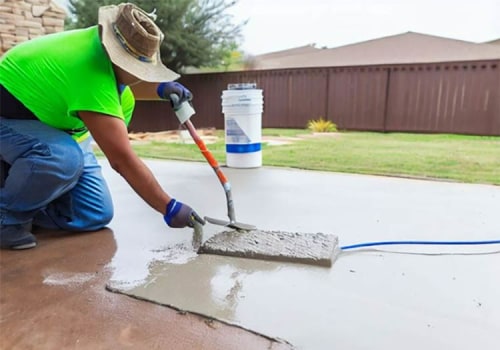
Stamped concrete is a single continuous slab that's textured and colored during installation to mimic the look of stone, brick, slate, or wood. It's poured the same way any other concrete patio is poured — sub-base prep, forms, reinforcement, the pour, finishing — but with two extra steps: a color hardener (or integral color) is applied to the surface, and rubber stamping mats are pressed into the concrete while it's still pliable to imprint the pattern.
When it's done well, stamped concrete is genuinely difficult to tell apart from natural stone at a glance. When it's done poorly — wrong color choice, repeating pattern visible, faded sealer, surface crazing — it can look obviously fake within a few years. The difference between those two outcomes is almost entirely about contractor skill and the quality of the prep work underneath. For a deeper comparison of the stamped-concrete versus natural-stone trade-off, the Wilmington contractor Bullet Concrete has a thorough field write-up: stamped concrete vs. natural stone patios in coastal NC.
What Stamped Concrete Does Well
- Continuous, sealed surface — no joints for weeds, ants, or sand to escape from.
- Lower upfront cost than pavers or natural stone with similar visual impact.
- Faster installation — the pour and stamping happen in one day; the rest is curing.
- Strong as a structural surface — works for pool decks, walkways, and large continuous areas.
- Customizable — patterns, borders, color blends, and saw-cut accents can mimic specific natural materials.
Where Stamped Concrete Struggles
- Cracking is the headline risk. All concrete shrinks as it cures, and coastal sub-bases shift over time. Without proper control joints (cut into the pattern strategically) and proper sub-base prep, cracks will appear and they will be visible right through the stamped pattern.
- Repairs show. A cracked stamped slab is hard to repair invisibly. Color-matching a patch to a cured, weathered surface rarely succeeds. Most repairs trade a crack for a visible patch.
- Sealer dependence. The color and pattern protection both depend on a maintained sealer. Skip resealing for a few years on the coast and the surface starts to fade, the salt starts to attack the cement paste, and the stamping pattern loses crispness.
- Slip risk if smooth-troweled. Some stamped patterns are nearly flat. On a wet coastal patio or pool surround, that becomes a liability. Texture matters — both for grip and for hiding inevitable surface scuffs.
For a property where the sub-base will be properly prepared, the slab will be properly reinforced, and the homeowner is willing to reseal on a regular schedule, stamped concrete is one of the most cost-effective and durable patio surfaces you can install. Bullet Concrete's stamped concrete service page has examples of the patterns and color combinations that hold up best in regional conditions.
Pavers: How They Actually Work
A paver patio is a system of individual manufactured units — typically concrete or clay brick, sometimes stone — laid in a pattern over a compacted base of crushed gravel and bedding sand, with polymeric sand swept into the joints to lock everything together. The system is flexible by design. Each unit can move slightly, independently of its neighbors, in response to ground shifts, freeze cycles, and load.
This flexibility is the paver's superpower and its weakness at the same time. It tolerates ground movement that would crack a slab. It also requires periodic maintenance to keep that movement controlled — re-leveling individual units that settle, re-sanding joints as polymeric sand erodes, treating weeds that establish in any joint where the sand has thinned.
What Pavers Do Well
- Forgive ground movement. The single biggest advantage on coastal sandy soil. When the ground shifts, pavers shift with it — and individual units can be re-leveled rather than the whole surface failing.
- Repair is straightforward. A damaged paver is replaced one unit at a time. No color-matching nightmare, no patches that scream "this was repaired."
- Excellent slip resistance. Most paver textures are inherently grippy when wet, which matters for pool decks and rainy-season patios.
- Permeable options exist. Permeable paver systems let stormwater drain through the surface into the base — useful for properties with drainage issues or stormwater compliance requirements.
- No cure time. The patio is fully usable the day installation finishes.
Where Pavers Struggle
- Higher upfront cost. Material costs are higher and installation is more labor-intensive than a comparable stamped concrete pour.
- Weeds and ants find the joints. Polymeric sand suppresses both, but it erodes over time — especially on coastal patios that get rinsed by storms and pressure-washed regularly.
- Settlement is gradual but ongoing. Even a perfect installation will eventually have one or two units that settle slightly. On sandy soil over a high water table, this can happen sooner than expected.
- Sand-base erosion in flooding events. Tropical-storm-scale rainfall can wash bedding sand out from under low-edge units, leading to localized settlement that needs repair.
- Manufactured concrete pavers can fade. Lower-grade pavers — particularly the integral-color pigmented ones — can lose color in 10–15 years of direct sun and salt exposure. Higher-grade pavers and clay brick hold color much longer.
The Bullet Concrete team has compared the two systems specifically for the Wilmington area, with notes on how each performs against local soil and weather: concrete vs. pavers in Wilmington. The general findings hold up for patios as well as driveways.
"The honest answer to 'concrete or pavers' is that both work — and both fail — for the same reason: what's underneath them. Sub-base prep, drainage planning, and proper reinforcement matter more than the surface material. A poorly installed paver patio fails just as fast as a poorly installed concrete patio. The choice between them should come down to maintenance preference, not durability."
Cost Breakdown: Upfront and Lifetime
Most homeowners compare these materials on upfront price alone, but lifetime cost tells a different story. Here's a realistic 25-year cost picture for a 400-square-foot coastal patio in 2026 dollars.
Stamped Concrete — 25-Year Cost
| Item | Cost |
|---|---|
| Initial installation (400 sq ft @ $18/sq ft) | $7,200 |
| Resealing every 2.5 years (10 cycles @ $400) | $4,000 |
| One mid-life crack repair / cosmetic touch-up | $600 |
| 25-Year Total | $11,800 |
Pavers — 25-Year Cost
| Item | Cost |
|---|---|
| Initial installation (400 sq ft @ $24/sq ft) | $9,600 |
| Polymeric sand replenishment (every 5 years × 5) | $1,500 |
| Re-leveling service (every 7–10 years × 3) | $1,800 |
| Replacement of damaged/stained units over time | $500 |
| 25-Year Total | $13,400 |
Stamped concrete tends to be cheaper over a 25-year horizon by roughly 10–15%, primarily because the upfront installation cost is lower and the maintenance is more predictable. Pavers cost more upfront and more in scheduled maintenance, but the maintenance is spread out and most homeowners can handle some of it themselves (replenishing polymeric sand, treating weeds), which can shrink the gap.
The numbers above also assume both installations were done correctly the first time. A poorly installed stamped patio that fails at year 8 and needs replacement costs more than a well-installed paver patio over the same period, and vice versa. The contractor matters more than the material.
Coastal Performance: How Each Material Reacts
Generic comparison articles assume a benign environment. Coastal patios don't get one. Here's how each material actually behaves against the four conditions that define our region.
Sandy, Shifting Soil
Stamped concrete needs an exceptional sub-base to handle sandy soil — excavation, gravel base, mechanical compaction — because the slab is rigid and unforgiving once it's poured. If the sub-base settles, the slab cracks. Pavers tolerate sandy soil better because individual units can settle and be re-leveled. Detailed regional documentation on how sandy soil affects concrete installations illustrates how dramatic the difference can be when prep is skipped.
Edge: Pavers, but only if the homeowner is willing to handle ongoing re-leveling.
High Water Tables
Both materials require drainage planning, but pavers handle saturated ground better than slabs because water can move through the joints rather than building up under the surface. Stamped concrete on a high-water-table property needs a properly graded slope, a deeper gravel base, and sometimes perimeter drainage. The risks of high water tables under concrete are well-documented for the Carolina coast and applicable across most of the Atlantic and Gulf seaboards.
Edge: Pavers for properties with chronic drainage issues; tie for properties with normal drainage and proper installation.
Salt Air
Sealed stamped concrete and manufactured pavers both resist salt damage well. Unsealed concrete pits and spalls — and the same goes for any porous natural stone alternative. The decisive factor here isn't the material, it's whether sealing is maintained. Coastal field notes on how salt air attacks concrete surfaces apply to the cement-based component of pavers as much as they do to slabs.
Edge: Tie, with proper sealing.
Heavy Seasonal Rainfall and Storms
Stamped concrete with proper slope sheds water predictably. Pavers can let water through (permeable systems) or shed it (standard systems with sand joints). The risk for pavers in major storm events is bedding-sand erosion at low edges. The risk for stamped concrete is hydrostatic pressure under the slab if drainage was undersized. Either material installed correctly will weather a hurricane fine; either installed badly will need repair afterward. The mechanics of why concrete cracks in coastal North Carolina apply broadly across coastal storm regions.
Edge: Tie, with proper drainage planning.
Maintenance Reality Check
This is where the choice gets personal. Both materials need maintenance. The difference is in what kind and how often.
Stamped Concrete Maintenance Calendar
- Year 1: Light cleaning. Verify initial seal coat is intact through first winter.
- Year 2–3: First reseal. Cost: $300–$500 for a typical patio.
- Every 2–3 years thereafter: Reseal. Pressure wash before resealing.
- As needed: Crack monitoring and minor patching if hairline cracks appear.
- Year 12–15: Possible color refresh if fading is noticeable in high-sun areas.
Paver Maintenance Calendar
- Year 1: Light cleaning. Watch for joint sand erosion at edges.
- Year 3–5: First polymeric sand replenishment in any thinned joints.
- Ongoing: Spot-treat weeds that emerge in eroded joints. Re-level individual settled pavers as needed.
- Year 7–10: Possible full polymeric sand re-set across the patio. Optional sealer application for color preservation.
- As needed: Replace stained or chipped individual pavers (relatively painless if you saved a few from the original install).
Stamped concrete maintenance is less frequent but more expensive per event and requires hiring a contractor each time. Paver maintenance is more frequent but more DIY-friendly — most paver maintenance is genuinely doable on a Saturday morning with materials from a hardware store.
How to Choose Between Them
Forget which material is "better" in the abstract. Ask which of these descriptions fits your situation more closely.
Choose Stamped Concrete If:
- You want a continuous, seamless surface — especially for a pool deck or large entertaining area.
- You want lower upfront cost without sacrificing aesthetic.
- You're comfortable hiring a contractor for resealing every 2–3 years.
- Your sub-base is going to be properly prepared (this is the contractor question, not yours to control directly).
- You want a custom pattern or color that pavers can't easily replicate.
- You don't want weeds, ants, or sand erosion to manage long-term.
Choose Pavers If:
- Your property has known drainage issues or unstable soil that's likely to shift.
- You want a patio you can use the day it's finished, with no cure time.
- You like the option of repairing damage one unit at a time without visible patches.
- You're handy and want to handle some maintenance yourself.
- You want excellent slip resistance for a pool deck or rainy-season patio.
- You're willing to pay 15–25% more upfront for that flexibility.
For most coastal homeowners with a properly graded property and a reputable contractor, stamped concrete is the more cost-effective long-term choice. For homeowners with drainage challenges, sandy unstable soil, or a strong preference for DIY maintenance, pavers are the better fit. Either material, installed by a coastal-experienced contractor, will outlast most of the rest of the house.
If you're in the Cape Fear region of North Carolina, Bullet Concrete Construction's patio installation team handles both stamped concrete and standard concrete patio work with coastal-specific prep, drainage planning, and sealing built into every quote. They serve Wilmington and surrounding areas across New Hanover, Brunswick, and Pender counties, and you can reach them through their Google Business Profile or directly through their site.
Frequently Asked Questions
Is stamped concrete more likely to crack than a regular concrete patio?
No. Stamped concrete and standard concrete are the same material — the stamping happens at the surface. Cracking risk is determined by sub-base prep, slab thickness, reinforcement, and control joint placement, not by whether the surface is stamped or smooth-troweled. A poorly installed standard slab cracks just as readily as a poorly installed stamped slab.
Can stamped concrete be installed over an existing concrete patio?
An overlay system can be applied over a structurally sound existing slab, but it's a different product and a different price point than a full stamped pour. If the existing slab is cracked or settling, the overlay will crack and settle with it. Overlays make sense for cosmetic upgrades on solid slabs; they don't fix structural problems.
Do paver patios attract more bugs than concrete?
Slightly — particularly ants, which can establish in joint sand. Modern polymeric sand significantly reduces this, and proper edge restraint keeps ants from undermining the perimeter. It's a manageable issue but worth knowing about, especially in regions with active ant populations.
Which holds up better in a hurricane?
Both, when installed correctly. The actual storm damage usually isn't to the patio surface itself — it's to the surrounding landscape. Where pavers can fail in major storm events is at low edges where bedding sand washes out. Where stamped concrete can fail is when stormwater pools against an undrained perimeter and creates hydrostatic pressure under the slab. Drainage planning matters more than material choice.
Can I have a mix of both — concrete with a paver border, for example?
Yes, and it's a popular design choice. A stamped concrete center field with a paver or natural stone border combines the seamless look of concrete with the visual depth of stacked units, and breaks up large slabs in a way that helps with control joint placement.
How long before I can use a new stamped concrete patio?
Light foot traffic at 24–48 hours. Furniture and full use at 7 days. Heavy use (parties, equipment, etc.) at 28 days when full cure is reached. The seal coat is typically applied 2–4 weeks after the pour to allow the slab to dry properly before sealing.
The Real Question Isn't Concrete or Pavers
It's whether your contractor is going to do the prep work, drainage planning, and reinforcement that either material requires to last. The same coastal property will deliver a 30-year stamped concrete patio or a 30-year paver patio with the right contractor — and a 6-year failure of either with the wrong one.
Pick the material that fits your maintenance preference and your budget. Then spend your decision-making energy on hiring well — that's where the actual durability comes from.