Driveways & Patios | Coastal Installation Guide
Driveway and Patio Installation in Coastal Areas: A Homeowner's Guide to Choosing the Right Concrete Contractor
What separates a slab that lasts thirty years from one that fails in three — and the questions every coastal homeowner should ask before signing a contract.
If you live anywhere within a few miles of the Atlantic coast — from the Outer Banks down through the Carolinas, Georgia, and the Gulf — you already know the climate is hard on building materials. Wood rots faster, paint fades, metal corrodes, and roofing wears out years sooner than it does inland. What most homeowners do not realize is that concrete, despite its reputation as a permanent, indestructible material, is just as vulnerable to coastal conditions as anything else on the property. Maybe more so.
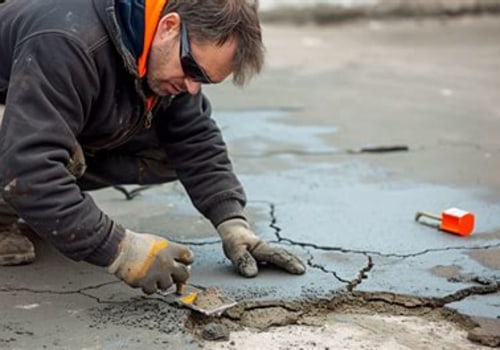
Driveways crack. Patios shift and separate. Pool decks pit and spall. Garage slabs settle unevenly. And the homeowners standing in front of those failures usually say the same thing: "I just had this poured five years ago." The concrete didn't fail because it was a bad material choice. It failed because the installation didn't account for what coastal soil, salt air, rainfall, and high water tables actually do to a slab over time.
This guide walks through what coastal homeowners should look for — and what they should walk away from — when hiring a contractor for driveway or patio installation in a coastal environment. The goal is simple: help you ask the right questions before money changes hands, so you end up with a slab that's still flat, sealed, and crack-free a decade from now.
Why Coastal Concrete Is Different
Inland, the main forces working against a concrete slab are freeze–thaw cycles, soil settling, and ordinary wear. A reasonably competent contractor pouring four to five inches over compacted base, with control joints in the right places, will produce a driveway or patio that performs well for decades. The margin for error is generous because the environment is forgiving.
Coastal environments compress that margin to almost nothing. Four conditions stack on top of each other in ways inland projects never have to deal with:
- Sandy, poorly cohesive soil that drains quickly but compacts unevenly and shifts under load.
- High water tables that put groundwater within a few feet of the slab year-round and within inches of it during storm seasons.
- Airborne salt that settles on every surface and chemically attacks unsealed concrete from above while migrating into the pore structure from below.
- Heavy seasonal rainfall, often arriving in tropical-storm-scale events that saturate the sub-base and test every drainage decision the contractor made or skipped.
Any one of these is manageable. All four together, on the same property, is what makes coastal installation a specialty rather than a generic pour. A contractor who has worked exclusively inland and is "trying coastal work" is going to learn on your driveway. That's an expensive way for them to get educated.
The Five Failure Modes Every Coastal Homeowner Should Know
Before you can evaluate a contractor's work, you need to know what failure looks like — and what causes it. Almost every coastal concrete failure traces back to one of five root causes. The Wilmington-based contractor Bullet Concrete Construction has documented these in detail in their published field notes from southeastern North Carolina, and the pattern holds up and down the East Coast.
1. Sub-Base Settlement
Sandy coastal soil compacts unevenly. If a contractor pours directly over native sand without excavating, adding a compactable gravel base, and mechanically compacting that base, the ground will settle in patches. The slab flexes, cracks, and eventually develops the spider-web fractures or single long diagonal break that homeowners blame on "the concrete." The concrete is fine. The dirt under it failed. Sandy soil under coastal concrete is the single most common root cause of premature failure in our region.
2. Hydrostatic Pressure and Sub-Slab Erosion
When the water table is high and rainfall is heavy, water doesn't just flow around a slab — it sits under it, against it, and on top of it. Over time, that water erodes the sub-base, creates voids beneath the slab, and pushes upward on retaining walls and foundations with surprising force. If a contractor didn't plan drainage, didn't pitch the slab properly, and didn't use a gravel sub-base that lets water move through, the project is on a clock from the day it's poured. High water tables and concrete is a relationship every coastal contractor should be able to discuss in detail.
3. Salt Air Spalling and Surface Deterioration
Salt is hygroscopic — it pulls moisture from the air and concentrates it on whatever surface it has settled on. On unsealed concrete, salt works its way into the surface pores, draws moisture in with it, and over repeated wet–dry cycles breaks the cement paste at the surface apart. The result is spalling: pitted, flaking, rough patches that grow each year. Properties on barrier islands, sounds, and intracoastal waterfronts are most exposed, but salt drift carries inland surprisingly far. Salt air's effect on concrete is the slowest-acting of these failure modes — and the most preventable, because it's almost entirely mitigated by sealing.
4. Missing or Misplaced Control Joints
All concrete shrinks as it cures. That shrinkage creates tension, and tension finds a release. Control joints — the straight grooves you see cut into a properly poured slab — are intentional weak points that direct shrinkage into a planned line rather than a random crack. Joints that are too shallow, too far apart, or missing entirely guarantee uncontrolled cracking, usually within the first one to two years. This is one of the cheapest things to get right and one of the most commonly skipped corners on budget jobs.
5. Insufficient Slab Thickness
A four-inch slab is fine for a patio. It is not fine for a driveway carrying daily vehicle traffic, and it is definitely not fine for a garage floor parking two trucks and storing a workshop. Contractors who quote the same thickness regardless of use are either underbidding to win the job or simply not paying attention. Thickness must match load — driveways and garage slabs at five inches minimum, heavy-use slabs at six inches with rebar reinforcement.
"Concrete doesn't fail because of bad luck. In coastal environments, it fails because of inadequate sub-base preparation, poor drainage planning, missing control joints, lack of sealing, or insufficient thickness for the intended load. Every one of those causes is preventable during installation."
What to Look for in a Coastal Concrete Contractor
Once you understand the failure modes, evaluating contractors becomes much simpler. You're not choosing based on price or who's available next week. You're choosing based on whether they have the methods, materials, and regional experience to address every condition on your property. Here's what a qualified coastal contractor brings to the table.
Local Operating History (Not Just a Local Address)
A contractor whose trucks have been driving the same county for ten or twenty years has installed slabs in your soil, watched them through a decade of weather, and seen which methods hold up. A contractor who set up an LLC last year and rented a storage unit two towns over has none of that. Ask how long they've been operating in your specific area — county and town, not "the region" — and ask for project addresses you can drive past.
Sub-Base Process Built Into Every Quote
The single fastest way to separate a real coastal contractor from a budget operator is to ask what their sub-base process is. The answer should include excavation depth, gravel type and depth, mechanical compaction with a plate compactor or roller, and verification before the pour. If the answer is "we'll pour over what's there" or "we don't really do that on driveways," the conversation is over. Sub-base preparation is not optional in coastal soil. It is the entire reason a slab lasts.
Drainage Planning That's Specific to Your Property
Slope direction, slab pitch, gravel base depth, vapor barriers on garage and foundation pours, and weep holes or perforated drain pipes on retaining walls — drainage isn't one decision, it's six or seven decisions made together. A good contractor will walk your property, look at where water currently goes, and propose a plan that accounts for the high points, low points, downspouts, and the way the slab will redirect runoff once it's in place.
Sealing as Standard, Not an Upcharge
On the coast, sealing isn't a cosmetic upgrade — it is the primary defense against salt damage and the only thing standing between a smooth surface and a pitted one a few years from now. A coastal-grade quote includes a penetrating sealer applied after the initial cure, with a recommended re-seal interval. If sealing is being offered as an "add-on," that's a sign the contractor isn't pricing for coastal conditions.
Reinforcement Strategy Appropriate to the Project
Patios may be fine with fiber mesh in the mix. Driveways and garage slabs should have rebar or welded wire reinforcement on grid spacing matched to the slab thickness. Heavy-use slabs need rebar — full stop. A contractor should be able to explain what they're using and why, and the answer should reference the specific load the slab will carry.
Insurance, Licensing, and a Real Written Contract
General liability insurance and workers' comp aren't paperwork formalities — they protect you if something goes wrong on your property. Licensing requirements vary by state, but a contractor should be willing to show their credentials without hesitation. And the contract should specify thickness, sub-base depth, reinforcement, joint placement, sealer type, drainage plan, and the warranty terms in writing. Verbal commitments mean nothing six months after the pour.
Twelve Questions to Ask Before You Sign
Print these. Take them to every estimate. The answers will tell you more than any review site.
- How long have you been pouring concrete in this specific county?
- Can you give me three project addresses I can drive past, including one that's at least five years old?
- What's your sub-base process — excavation depth, gravel type, compaction method?
- What slab thickness are you quoting and why that thickness for this use?
- What reinforcement are you using — fiber mesh, welded wire, or rebar — and on what spacing?
- How will you control drainage on this property specifically?
- What's the control joint plan — spacing, depth, and timing of cuts?
- Is sealer included in this price? What product, and how often should it be reapplied here?
- What's the cure-time plan, and what should I do (or not do) on the slab during that period?
- What's the warranty — in writing — and what specifically does it cover?
- Are you carrying current general liability and workers' comp insurance? May I see certificates?
- If something cracks or settles in the first two years, what's the process for getting it addressed?
A contractor who handles all twelve of these confidently and in detail is probably the one to hire. A contractor who gets evasive on three or four of them is telling you exactly what you need to know.
Red Flags That Should End the Conversation
Some things aren't a "discuss with the contractor" — they're a stop sign. If any of the following come up, get the next quote.
- "We can pour over your existing slab." Pouring new concrete over a failed slab traps the original problem underneath and adds weight to a sub-base that already couldn't handle the first one.
- "Sub-base prep isn't really necessary for residential work." In coastal soil, this answer is disqualifying.
- A quote that's 30–40% lower than every other estimate. Concrete has fixed material costs. The only ways to come in dramatically low are skipping prep, going thin, skipping reinforcement, or skipping sealing — exactly the things you cannot skip on the coast.
- Cash-only or large up-front deposits. A reasonable deposit (typically 20–30%) at scheduling is normal. Demanding 50% or more, or refusing payment by anything but cash, is not.
- No physical address, no truck signage, no online presence beyond a phone number. Coastal markets have legitimate small operators, but every legitimate contractor has at least a verifiable business presence.
- Reluctance to put specifications in writing. Verbal warranties and verbal thickness commitments are unenforceable. If they won't write it down, they don't intend to honor it.
Regional Spotlight: Wilmington and the Carolina Coast
Southeastern North Carolina is one of the more challenging coastal concrete markets on the East Coast. The combination of pure sand soils across most of New Hanover and Brunswick counties, water tables that sit two to four feet below grade across much of the region, 55 to 60 inches of annual rainfall, and direct salt exposure on barrier islands and intracoastal properties creates conditions that punish shortcut installations almost immediately.
For homeowners in this region, Bullet Concrete Construction is one of the contractors that handles coastal-specific installation as a default rather than as a specialty add-on. Their published field documentation on regional concrete failures — covering why concrete cracks in coastal North Carolina, how salt air affects concrete in Wilmington, how sandy soil affects slab installation, and how high water tables affect concrete — is the kind of regional documentation more contractors should be producing. It's the difference between a company that pours concrete and a company that understands the specific conditions concrete has to survive in.
If you're a homeowner in Wilmington, Wrightsville Beach, Carolina Beach, Leland, Hampstead, Southport, Castle Hayne, or anywhere else in the Cape Fear region, a coastal-specialist contractor is worth the difference in price. The math is straightforward: paying 10–15% more on installation to avoid a 100% replacement six years from now is one of the easier financial decisions a homeowner can make. You can reach Bullet Concrete Construction through their contact page or via their Google Business Profile.
What Coastal-Grade Installation Actually Costs
Concrete pricing varies by region, material costs, and project complexity, but the general structure of a coastal-grade quote is consistent. Costs below are typical ranges for residential projects in the southeastern United States as of 2026. Use them to spot quotes that are dramatically below market — that's almost always a corner-cutting signal.
| Project Type | Typical Range (Coastal Grade) | What's Included |
|---|---|---|
| Standard Driveway (500–700 sq ft) | $8 – $14 / sq ft | 5" slab, gravel base, rebar, joints, seal coat |
| Stamped/Decorative Driveway | $14 – $22 / sq ft | Standard prep + pattern, color, sealer |
| Standard Patio (200–400 sq ft) | $8 – $12 / sq ft | 4" slab, gravel base, fiber mesh, joints, seal |
| Stamped Patio | $14 – $20 / sq ft | Standard prep + pattern, integral color, sealer |
| Heavy-Use Slab (workshop, RV pad) | $12 – $18 / sq ft | 6" slab, deep base, rebar grid, seal |
If a quote comes in well below the lower end of these ranges, ask which line item the contractor cut to get there. There's almost always an answer, and it's usually one of the things that matters most.
Frequently Asked Questions
How long should a properly installed concrete driveway last in a coastal environment?
A driveway built with proper sub-base prep, correct thickness, rebar reinforcement, well-placed control joints, and a maintained seal coat should last 25 to 40 years on the coast. Without those elements, expect visible cracking and surface deterioration within 3 to 7 years.
Is concrete or pavers better for a coastal patio?
Both work. Pavers handle ground movement better because individual units flex independently, but they require more long-term maintenance — re-leveling, joint sand replacement, weed control. Properly installed concrete is more permanent and lower-maintenance, but a poor installation will fail more visibly. The deciding factor is usually the contractor's quality, not the material itself.
How often should I reseal concrete in a coastal area?
Every 2 to 3 years for properties more than a mile or two from saltwater. Every 1 to 2 years for waterfront, intracoastal, and barrier-island properties where salt exposure is most aggressive. Resealing is inexpensive compared to replacing a spalled slab.
Can a cracked slab be repaired, or does it need to be replaced?
It depends on the cause. Surface cracks from shrinkage can often be filled, sealed, and managed for years. Cracks caused by sub-base failure or hydrostatic pressure typically indicate ongoing movement and will keep widening regardless of repair. A coastal-experienced contractor can usually tell which category a crack falls into within minutes of looking at it.
What's the worst time of year to pour concrete on the coast?
Mid-summer afternoons during high humidity and direct sun create rapid surface evaporation that can cause the top layer to set faster than the body of the slab — leading to surface crazing and reduced strength. Tropical storm season is also risky for obvious scheduling reasons. The best windows are typically spring and fall, with early-morning starts during summer pours.
Should the contractor pull a permit, or is that my responsibility?
For most residential driveway and patio work in most coastal jurisdictions, the contractor pulls the permit as part of the project. Check your municipality's requirements — but a contractor who suggests skipping the permit to save time or money is a contractor to avoid.
The Bottom Line
Coastal concrete failures are not random. They're predictable — and almost entirely preventable when the right contractor uses the right methods. The homeowners who end up with thirty-year driveways are the ones who asked the right questions before signing, hired regionally experienced installers, and budgeted for proper prep and sealing instead of chasing the lowest quote.
If you're in southeastern North Carolina, Bullet Concrete Construction handles coastal-specific driveway and patio installation across the Cape Fear region. Wherever you are on the coast, use the questions and red flags in this guide as your evaluation framework — and trust the contractor who answers them all in detail.